








Senior living guide
Assisted living vs nursing home: what is the difference
Both offer help every day, but they are built for different needs. Here is how they compare on care, setting, cost and who pays, plus where memory care and home care fit.
Assisted living and nursing homes provide different kinds of support. Understanding the difference helps you focus on what a person needs day to day, which medical services are required and what each setting offers. Use this guide to prepare questions for a health professional and the communities you visit.
The short version: assisted living is a home-like community for seniors who need help with daily routines such as bathing, dressing and medications, but don't need round-the-clock medical care. A nursing home (also called a skilled nursing facility) is a licensed medical setting with nurses on duty around the clock, for people who need ongoing medical care or are recovering after a hospital stay.
What assisted living offers
Assisted living is built around independence with support. Residents have a residence of their own, eat meals with neighbors, choose their activities and get help with the parts of the day that have become hard to manage alone.
- Help with bathing, dressing and grooming
- Medication management
- Chef-prepared meals, housekeeping and laundry
- Activities, outings and scheduled transportation
- Staff on site 24 hours a day
Learn more about assisted living at Saga.
What a nursing home offers
A nursing home provides medical care alongside daily help. It is the right setting when someone needs skilled nursing every day: wound care, IV medications, complex medical needs, or rehabilitation after surgery, a stroke or a hospital stay. Many stays are short-term rehab; others are long-term for people with serious, ongoing health needs.
- Licensed nurses on duty around the clock
- Physical, occupational and speech therapy
- Help with all daily activities, including eating and moving
- Private or shared rooms, depending on the community and availability
Assisted living vs nursing home at a glance
| Assisted living | Nursing home | |
|---|---|---|
| Who it is for | Seniors who need help with daily routines but are medically stable | People who need daily skilled nursing or rehabilitation |
| Care | Personal care and medication help, with staff on site 24 hours | Medical care from licensed nurses around the clock, plus therapy |
| Setting | A private residence, shared dining and a full activity calendar | A clinical setting, often a shared room |
| National median cost | About $6,200 a month | About $9,600 a month for a shared room, $10,800 for a private one |
| Medicare | Does not pay for room, board or personal care | Can pay for a limited short-term stay after a qualifying hospital stay; does not pay for long-term custodial care |
| Medicaid | Varies by state and community | Pays for long-term nursing home care for people who qualify |
Cost figures: CareScout 2025 Cost of Care Survey, national medians, released March 2026. Prices vary widely by state and city.
Where memory care fits
Memory care is a third option, for people living with Alzheimer's disease or another form of dementia. It is not a nursing home. It offers a secure setting, a calm daily rhythm and a team trained in dementia care, without the clinical environment, for people whose main need is safety and guidance rather than daily medical treatment. Our guide to assisted living vs memory care covers the difference in detail, and memory care at Saga explains our approach.
Where home care fits
Some families start with paid help at home. It keeps a parent in familiar surroundings, but costs add up quickly as hours grow: the national median for a non-medical caregiver is about $35 an hour, so 44 hours a week comes to roughly $6,700 a month, before the mortgage or rent, food, utilities and home upkeep. Coverage depends on the hours arranged. Compare the support needed during the day and overnight, the cost of those hours and the person's preferences.
How to tell which one fits
A few questions usually point the way:
- Does your parent need daily medical treatment from a nurse, such as wound care or injections? A nursing home may be needed.
- Is the need mostly help with routines, like getting dressed, bathing, remembering medications or eating well? Assisted living is usually the better fit.
- Is memory loss driving the worry, such as wandering, getting lost or confusion that makes home unsafe? Look at memory care.
- Is this a recovery after a hospital stay? Short-term rehab in a skilled nursing facility often comes first, with assisted living as the next step home.
A physician, hospital discharge planner or the community team can help you weigh it. Our tour checklist helps when you start visiting, and paying for senior living covers how families plan for the cost.
Our communities
Assisted living and memory care at Saga
Four communities offer assisted living, and three offer memory care, in Texas, Arizona and California.
-

Assisted living & Memory care
Tarina of Kingwood
Kingwood, TX
From $3,775 a month · assisted living studio
See the community -
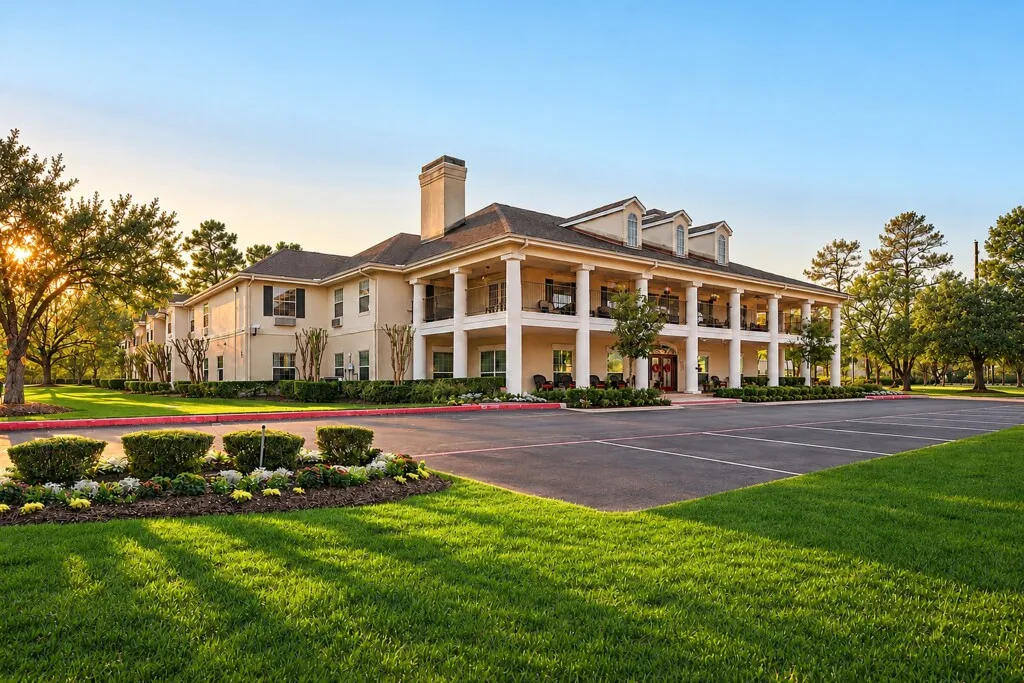
Assisted living & Memory care
Tarina of Cypresswood
Spring, TX
From $4,250 a month · assisted living studio
See the community -

Memory care
Barton House
Scottsdale, AZ
See the community -
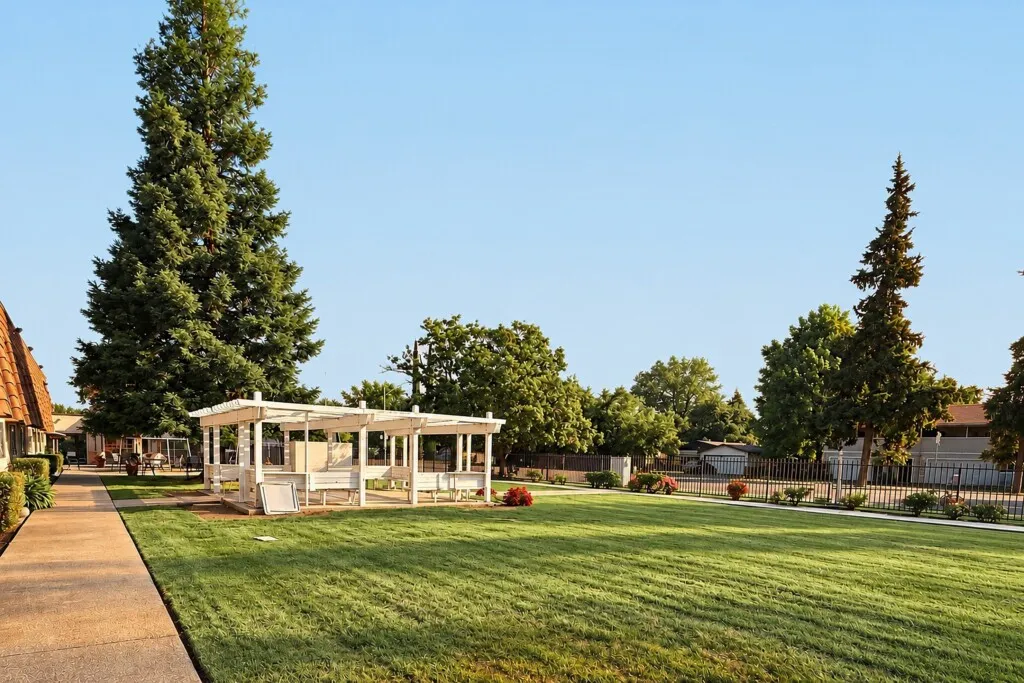
Assisted living
Tarina of Stockton
Stockton, CA
From $2,294 a month · shared one-bedroom
See the community -
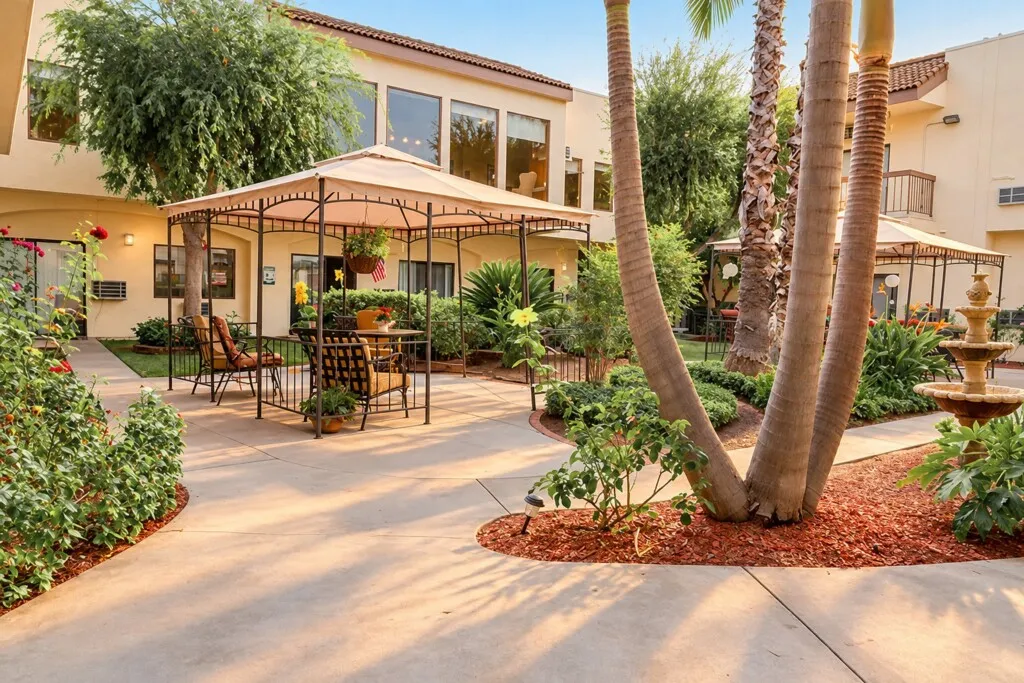
Assisted living
Novellus Clairemont
San Diego, CA
From $2,935 a month · assisted living studio
See the community
Questions
Assisted living and nursing homes: common questions
Is assisted living the same as a nursing home?
No. Assisted living is a home-like community for seniors who need help with daily routines but not daily medical care. A nursing home is a licensed medical setting with nurses on duty around the clock for people who need skilled nursing or rehabilitation.
Is assisted living cheaper than a nursing home?
Usually. CareScout's 2025 survey puts the national median for assisted living at about $6,200 a month, compared with about $9,600 for a shared nursing home room and $10,800 for a private one. Costs vary widely by state.
Does Medicare pay for assisted living or a nursing home?
Medicare does not pay for room, board or personal care in assisted living. It can cover a limited short-term stay in a skilled nursing facility after a qualifying hospital stay, but not long-term custodial care in a nursing home.
Can someone move from a nursing home to assisted living?
Often, yes. Many people go to a skilled nursing facility for rehab after a hospital stay, then move to assisted living once they no longer need daily nursing care.
Is memory care a nursing home?
No. Memory care is designed for people living with Alzheimer's or another dementia, with a secure setting, a structured daily rhythm and staff trained in dementia care. It is not a medical setting like a nursing home.
Come see it for yourself.
Choose the kind of visit that suits you. No pressure, no commitment.
- In-person tourMeet the team, explore the community and see a residence during your visit.
- Virtual tourA live video walk-through for family who live out of town.
- Come for lunchJoin us for lunch, meet a few neighbors and get a feel for daily life.
What to expect: Plan for 30 to 60 minutes to meet the team, see the community and ask questions. Allow more time if you join us for a meal.
Schedule a tour
Pick a day and time that works for you, and the community team will confirm it.
Prefer to talk first? Call the community directly.
- Tarina of KingwoodKingwood, TX(281) 767-2454
- The Terraces at KingwoodKingwood, TX(281) 519-3876
- Tarina of CypresswoodSpring, TX(281) 789-1946
- Barton HouseScottsdale, AZ(480) 719-0268
- Tarina of StocktonStockton, CA(209) 353-8015
- Novellus ClairemontSan Diego, CA(858) 225-2313